
Introduction
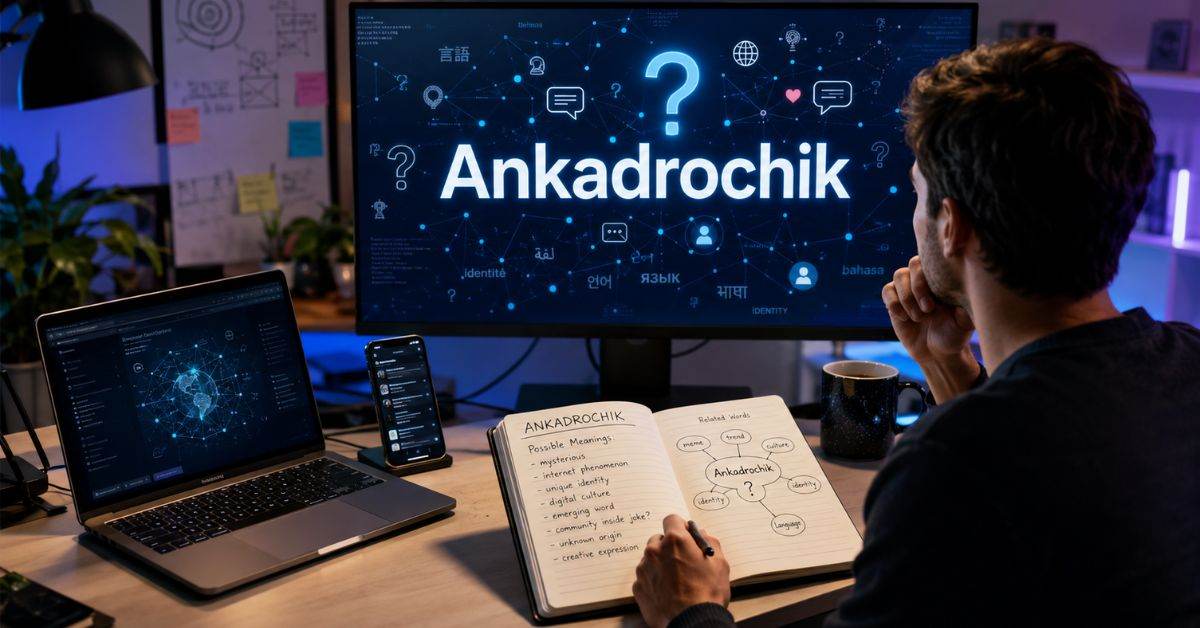
Online words can attract attention before anyone agrees on their meaning. Ankadrochik is one of those terms. It looks as though it might come from another language, a fictional world, a username, or a private joke. At the time of writing, there is no widely accepted dictionary definition or well-documented linguistic history for the term.
However, an invented term might become a project title, creative identity, meme, community emblem, or brand concept in the context of digital culture. Its meaning may develop through repeated use rather than arriving from an established dictionary.
This guide explores the available evidence, explains why mystery terms attract attention, and shows how to use the name creatively and responsibly.
What Does Ankadrochik Mean?
Ankadrochik does not currently have one verified, universal meaning. It is best understood as an open-ended coined word whose meaning depends on the person, page, project, or community using it. It could represent curiosity in one setting and a fictional character in another.
Several important points should be kept in mind:
- It does not need a fake ancient or secret origin.
- A creator may assign it a meaning and explain that choice honestly.
- Different communities may interpret it differently.
- Context matters more than the spelling alone.
Merriam-Webster explains that dictionary editors look for frequent, widespread, and meaningful use before adding a new word. The lack of an established entry suggests that this term has not yet developed a stable and broadly documented meaning.
That does not prevent people from using it. Many usernames, project names, fandom expressions, and online jokes begin as invented terms. Their definitions grow through repeated use and shared understanding.
Why Does the Word Feel Mysterious?
The word sounds as though it should already have a story. It is long enough to feel structured but unfamiliar enough to resist an immediate explanation.
People may think it resembles a surname, regional expression, fantasy character, coded message, or Slavic-style nickname. Resemblance, however, is not proof of origin.
Its mysterious quality comes from several features:
- Unfamiliar spelling: Most readers have not seen this exact letter pattern.
- Suggestive sound: The ending appears meaningful even when its function is unknown.
- Search curiosity: An unexplained term encourages people to investigate it.
- Narrative potential: Writers can attach a mood, character, or story to it.
Ambiguity can help a digital name stand out. People naturally remember words that make them pause and ask questions.
However, mystery alone is not enough to create long-term value. The surrounding content must clearly explain what the name represents. Otherwise, visitors may see it as random text rather than a meaningful identity.
Possible Linguistic Influences
The ending “-chik” may remind some readers of endings found in Slavic languages. That sound comparison does not prove that the complete word belongs to Russian, Polish, Ukrainian, or any other specific language.
Invented names often combine memorable syllables without following formal grammar. A careful linguistic discussion should therefore:
- Present language connections as possibilities rather than facts.
- Avoid publishing invented translations.
- Check recognized dictionaries before claiming an origin.
- Consider that the word may be entirely artificial.
- Separate spelling resemblance from genuine etymology.
False word histories can spread quickly online. When several websites repeat the same unsupported theory, repetition may begin to look like evidence.
The safest conclusion is that the term may sound influenced by familiar language patterns, but no reliable source currently confirms a specific root, translation, creator, or country of origin.
Writers discussing it should use phrases such as “may resemble,” “could have been inspired by,” or “there is no confirmed evidence.” This language keeps the content informative without misleading readers.
How Mystery Words Spread Online
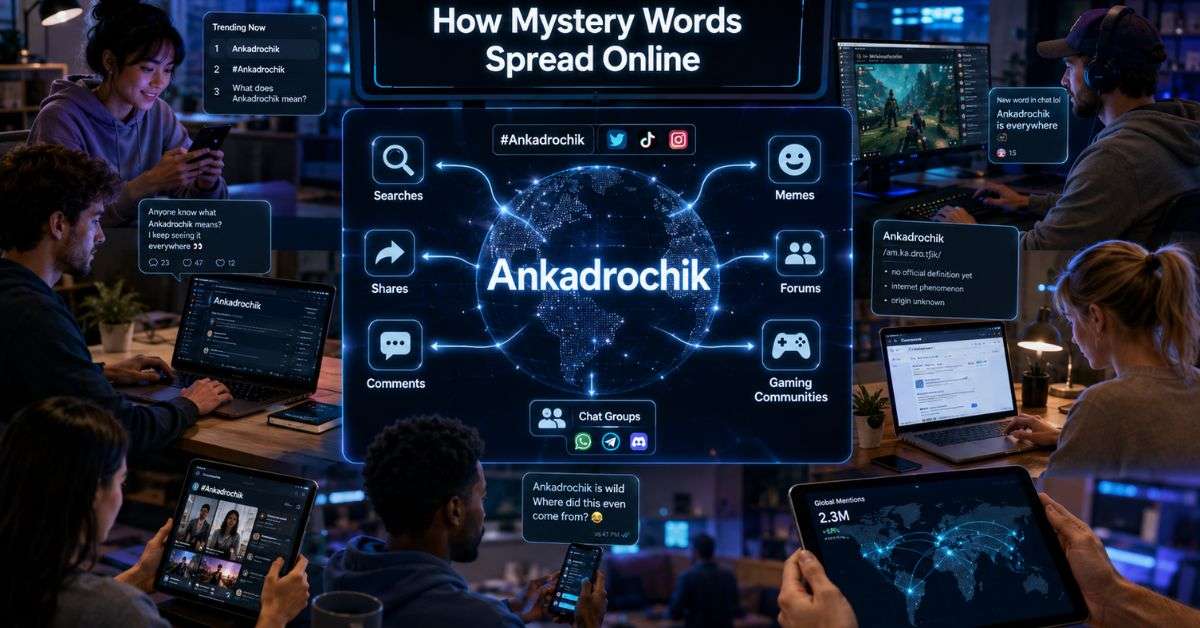
Unusual words can move through search engines, social media, gaming groups, forums, comment sections, and online discussions. Their growth may begin with one memorable label rather than a major cultural event.
The process often follows this pattern
- A new or rare term appears online.
- People search for its meaning.
- Blogs and social posts offer interpretations.
- Users repeat the most interesting explanations.
- A shared meaning develops, or the trend eventually fades.
Digital language can therefore evolve in public. Usernames, fandom terms, memes, and reaction phrases may become recognizable inside one community long before dictionaries record them.
Search visibility is not the same as natural popularity. Several similar articles may exist because publishers are targeting the same search phrase rather than because thousands of people use the term in daily conversation.
A useful test is to search the word in quotation marks and compare dates, contexts, and authors. Look for people using it naturally instead of pages that only attempt to define it.
Archived posts, creator statements, original artwork, conversations, and consistent community usage provide stronger evidence than unattributed claims. When the evidence is weak, saying so plainly makes the content more trustworthy.
Using Ankadrochik as a Digital Identity
An invented word can work well as a digital identity because it is distinctive and flexible. Ankadrochik could name an art account, gaming profile, newsletter, fictional persona, podcast, music project, or experimental media page.
Before using it, decide what people should associate with the name.
Possible identity statements
- “A digital character who explores internet myths.”
- “An experimental archive of unusual online art.”
- “A mysterious and strategic gaming identity.”
- “A creative project involving odd but practical concepts.”
Use consistent spelling, visuals, tone, and a one-sentence explanation across platforms. Consistency makes an unfamiliar name easier to recognize and remember.
A profile description might say:
Ankadrochik is a digital storytelling project exploring mysterious words, online identities, and creative internet culture.
Supporting internal resources could include a digital identity guide and an article about choosing a memorable username. These links help readers move from curiosity to practical identity-building.
Creative Ways to Use the Word
Its open meaning provides room for original projects. Instead of publishing another vague explanation, creators can give the term a clear purpose through stories, artwork, videos, games, or community activities.
Possible uses include
- A character in a webcomic or short story
- A title for a piece of visual art or music
- A name for a puzzle or online challenge
- A mascot for a digital-culture blog
- A fictional place in a game or novel
- A theme for an interactive storytelling campaign
- A private label for a creative productivity system
The strongest concept will connect the sound of the word with a recognizable experience. A dark visual style may suit a fictional archive, while colorful illustrations may turn it into a playful digital mascot.
Creators should also publish an “About” page explaining when the project started, what the name represents, and how other people may use it.
That page becomes an original, traceable source. Future readers can refer to the creator’s explanation instead of inventing their own unsupported history.
Username, Brand, or Story Concept?
The best role depends on the creator’s goal, audience, and long-term plan.
| Possible Use | Main Advantage | Main Risk | Best Practice |
| Username | Distinctive and memorable | May be difficult to spell | Add pronunciation and a short bio |
| Brand name | Flexible and potentially original | Meaning is unclear at first | Use a strong tagline |
| Fictional character | Mystery supports storytelling | Character may feel undeveloped | Create a clear personality |
| Community name | Members can shape the identity | Meaning may become inconsistent | Publish simple community values |
| Campaign title | Curiosity can attract attention | May feel like clickbait | Connect it with genuine value |
The comparison shows that mystery must be supported by clarity. A successful name should be easy to explain in one sentence.
For example, “A digital archive of strange creative ideas” is more helpful than simply saying, “It means something mysterious.”
The name itself may attract the first click, but its purpose, content, and audience experience will determine whether people remember it.
How to Check the Name Before Using It
A word may look original while conflicting with another identity, product, business, or legal claim. It should be checked carefully before commercial use.
| Check | What to Review | Why It Matters |
| Search engines | Existing meanings and associations | Prevents confusion |
| Social platforms | Available usernames and active profiles | Supports a consistent identity |
| Domain lookup | Website-name availability | Helps secure a stable web presence |
| Trademark databases | Similar commercial names | Reduces possible legal risk |
| Language review | Unwanted meanings in other regions | Protects international audiences |
| Pronunciation test | Ease of saying and remembering | Improves word-of-mouth discovery |
Also review common social platforms before announcing the project. Securing matching usernames can make the identity appear more professional.
These checks are useful starting points, but they do not replace professional legal advice when a large commercial investment is involved.
How to Give the Word a Clear Meaning
A new term gains meaning through consistent context and a definition people can repeat.
Use this framework
- Choose a role: Decide whether it represents a person, project, value, place, or community.
- Write one sentence: Explain it without abstract or confusing language.
- Create visual signals: Use a suitable logo, symbol, or design system.
- Show examples: Publish content that demonstrates the concept.
- Invite participation: Allow followers to use it in understandable ways.
An example definition could be:
Ankadrochik is a creative identity for people who turn strange internet ideas into useful art. That sentence is not presented as an ancient translation. It is a transparent, newly assigned definition created for a specific digital project.
Creators should date and publish their definition. This provides the concept with a clear starting point and allows later users to identify where the meaning came from.
The definition may evolve as the project grows, but its main idea should remain recognizable. Sudden and unexplained changes can confuse followers and weaken the identity.
Could It Become a Recognized Word?
Recognition depends on genuine use rather than articles claiming that a word is important. New vocabulary spreads when different people repeatedly use it with a reasonably stable meaning.
A term is more likely to last when it is:
- Useful for expressing a distinct idea
- Easy enough to type and remember
- Used by independent people
- Connected to meaningful content
- Flexible without losing its central identity
Without using regular English, it can continue to be a specialized username or project name. That would not make it unsuccessful. Many expressions remain valuable within gaming groups, artistic communities, fandoms, and private online spaces.
The future of Ankadrochik is therefore open. It could develop into a brand, fictional identity, meme, creative philosophy, or community label. It could also disappear when online curiosity moves elsewhere.
Its survival will depend on what people create with it and whether those creations give others a reason to repeat, remember, and share the name.
FAQs
Is Ankadrochik a real word?
It can be used as a coined word, but it does not currently have a widely verified dictionary meaning. It is better described as an invented or emerging online term.
What language does it come from?
No reliable evidence confirms a source language. Some features may remind readers of Slavic spelling patterns, but resemblance does not establish an origin.
Can I use it as a username?
Yes, when the username is available and does not impersonate someone else. Add a short description explaining the meaning you have assigned to it.
Is it safe to use as a business name?
Possibly, but first check business records, domains, social accounts, and trademark databases. Seek professional advice before making a major commercial investment.
How should it be pronounced?
There is no authoritative pronunciation. A creator might choose “an-kah-dro-chik,” but it should be presented as a selected pronunciation rather than an official linguistic rule.
Conclusion
Ankadrochik demonstrates how meaning can develop online. Its unfamiliar spelling creates curiosity, while its open structure gives writers, artists, gamers, and brand builders room to shape an identity around it.
The responsible approach is to avoid invented history and unsupported cultural claims. Treat it as a flexible coined term unless reliable evidence establishes something more specific. Check existing uses, test its pronunciation, review domains and trademarks, and define the concept clearly before building a public project.