

Introduction
THCA Isolate Powder is attracting attention among adults researching hemp-derived cannabinoid products. It is marketed as a refined, high-concentration form of tetrahydrocannabinolic acid, or THCA. Although it looks like an ordinary powder, it is not a regular supplement or kitchen ingredient.
The key point is that THCA can convert into delta-9 THC when heated. Cooking, vaping, smoking or baking therefore matter for safety and legal questions. Changing hemp rules, state restrictions and weak laboratory documentation can also affect buying decisions.
This guide explains what THCA Isolate Powder is, why food use needs caution, how to check a lab report and what consumers should review in 2026.
What Is THCA Isolate Powder?
THCA Isolate Powder is a concentrated cannabinoid material intended to contain a high percentage of THCA. Since THCA is the acidic precursor of delta-9 THC, heat can cause a chemical shift in it.
Consumers should understand
- “Isolate” does not prove product quality.
- Poorly packaged powder may be mishandled or misidentified.
- Heating THCA may increase THC-related effects and legal concerns.
- Medical promises should not replace professional advice.
Any THCA Isolate Powder product should be judged by current testing, safe packaging and lawful sale in the buyer’s location, not only by marketing.
THCA, THC and CBD: Main Differences
These cannabis-related compounds are often confused. The comparison below shows why heat exposure and accurate labels matter.
| Compound | Basic Meaning | Intoxicating Potential | Main Consumer Concern |
| THCA | Acidic precursor to delta-9 THC | Generally not associated with the same intoxicating effect before heating | Can convert to THC with heat |
| Delta-9 THC | Primary intoxicating cannabis cannabinoid | Yes | Impairment and legal controls |
| CBD | Cannabidiol | Generally not intoxicating | Label accuracy and product quality |
This product should not be marketed as a proven treatment for pain, anxiety or disease. FDA states that cannabis itself has not been approved to treat any disease or condition, although some approved medicines contain cannabis-derived or cannabis-related ingredients.
Why Heating Changes the Picture
The most important practical issue with THCA Isolate Powder is decarboxylation. Heat can convert a portion of THCA into delta-9 THC, so unheated and heated products may not present the same effects or legal concerns. Scientific literature reports that conversion can occur rapidly during baking, smoking or vaporizing.
Keep these points in mind
- Cooking, smoking or vaping may trigger conversion.
- High-heat storage can affect the product over time.
- A label showing only delta-9 THC may not show the total-THC picture.
- Total THC is more meaningful than terms such as “raw” or “hemp-derived.”
USDA hemp-testing guidance requires consideration of THCA conversion into THC and reporting of total available THC for hemp compliance testing.
Food Safety Risks Consumers Should Know
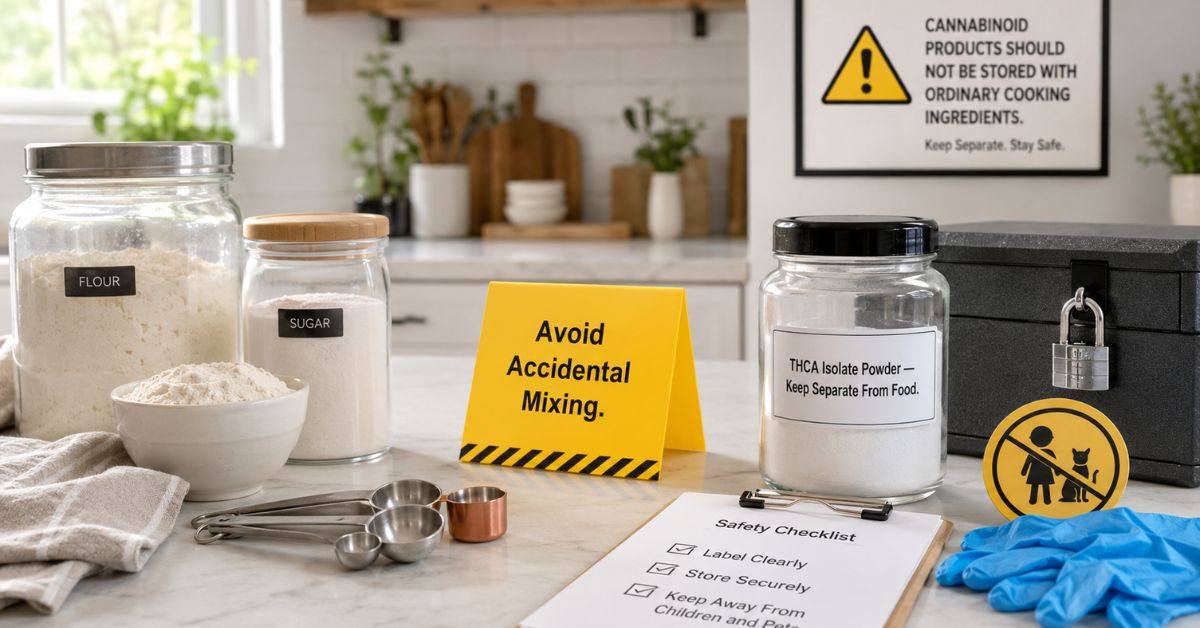
Using THCA Isolate Powder around food can create avoidable risk. Concentrated powder may be measured incorrectly, mixed unevenly or confused with an ordinary ingredient. Heating food containing THCA may also form more delta-9 THC.
Important concerns include
- Unexpected exposure for children, guests or pets.
- Uneven concentration in homemade food or drinks.
- Accidental use in ordinary cooking.
- Storage beside pantry items or baking ingredients.
FDA states that introducing food into interstate commerce with added THC or CBD is prohibited under federal food law.
A CDC investigation shows why caution matters. In October 2024, a Wisconsin restaurant mistakenly used THC-infused oil kept in a shared kitchen to prepare dough; at least 85 people experienced symptoms consistent with THC intoxication. The incident involved THC-infused oil, but it shows why cannabinoid ingredients must be separate from normal food supplies.
Legal Notes for 2026
The legal status of THCA Isolate Powder should be checked before purchase, transport or possession. Online availability does not prove a product is lawful in every state.
A federal hemp-law amendment was enacted on November 12, 2025, with its revised definition scheduled to take effect on November 12, 2026. It uses total THC, expressly including THCA, rather than considering delta-9 THC alone, and adds limits for finished hemp-derived cannabinoid products.
Before buying THCA Isolate Powder, check:
- Current state and local hemp or cannabis laws.
- Whether total THC is reported clearly.
- Whether the seller explains changing 2026 rules.
- Whether transport across state lines adds legal risk.
How to Read a Certificate of Analysis
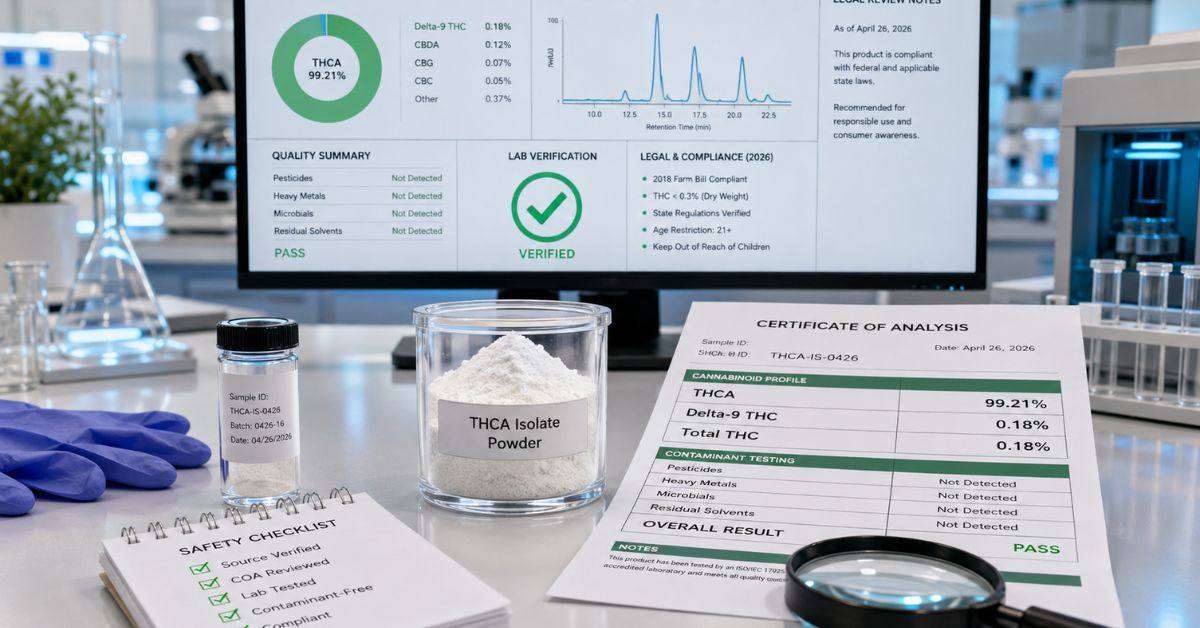
A Certificate of Analysis, or COA, is a batch-linked laboratory report. A trustworthy COA for THCA Isolate Powder should identify potency, total THC and possible contamination concerns.
| COA Check | Why It Matters | Warning Sign |
| Batch number | Connects report to product | No matching batch |
| Test date | Shows results are current | Old reused report |
| THCA and delta-9 THC | Shows cannabinoid breakdown | Only headline potency |
| Total THC | Supports legal review | Result omitted |
| Contaminant panel | Screens safety risks | Potency-only testing |
| Named laboratory | Supports verification | Unverifiable lab |
When checking a product, buyers should look for:
- Residual solvent screening.
- Pesticide and heavy-metal testing.
- Microbial contamination results.
- A batch number matching the package.
Smart Buying and Storage Advice
Adults considering THCA Isolate Powder where lawful should prioritize testing and secure storage instead of high potency or low price. A responsible product should offer:
- A current, batch-specific COA.
- Clear total-THC information.
- Contaminant screening results.
- Warning labels and company contact details.
- Packaging that does not resemble ordinary food.
Avoid products that claim to cure illness, promise legality everywhere, provide no matching laboratory report or encourage casual food use. Keep all cannabinoid products clearly labeled, locked away and separate from snacks, medicines and kitchen ingredients.
FAQs
Is THCA Isolate Powder the same as THC?
No. THCA is a precursor to delta-9 THC, although heat can convert some THCA into THC.
Can THCA Isolate Powder become intoxicating?
It may create THC-related effects after heating because THCA can convert into delta-9 THC.
Is it safe to mix into food?
It should not be treated as an ordinary food ingredient because food use creates heating, accidental-exposure and legal concerns.
What lab result matters most?
Review the batch match, THCA, delta-9 THC, total THC and contaminant panel.
Will federal THCA rules change in 2026?
A revised federal hemp definition is scheduled to take effect on November 12, 2026, expressly including THCA within total-THC considerations.
Conclusion
THCA Isolate Powder is a concentrated cannabinoid product, not a household powder or guaranteed wellness solution. Heat can convert THCA into delta-9 THC, food use can increase accidental-exposure risks and legal treatment may depend on total THC and state law.
In 2026, careful buyers should verify a current COA, review contaminant screening, read total-THC results and avoid unsupported medical or “legal everywhere” claims. The scheduled federal hemp-definition change on November 12, 2026 makes updated information especially important.
A safer decision begins with facts: confirm local legality, review testing, store products securely and treat THCA Isolate Powder with the caution expected for a concentrated cannabinoid material.